
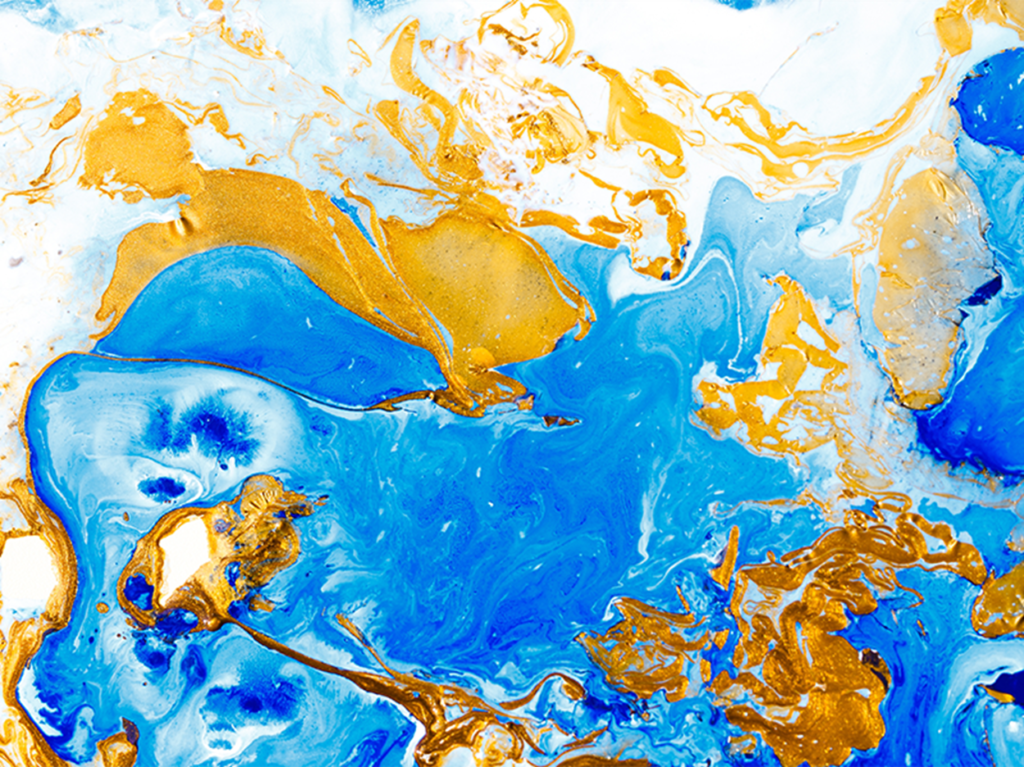
Ebru, whose roots date back to 10th century Iran and India, has taken its place among the most popular and aesthetic art branches over time. Ebru art is an effort to create visually pleasing forms with paints and to reflect your own imagination. It is a dreamlike art obtained by transferring the harmonious dance of paints to paper in an environment called a boat. This article will open a small door to the mystery of Ebru for you!
What are the necessary materials for Ebru art and what to pay attention to?
Ebru may seem like a very difficult, professional and challenging art from the outside. However, once you have the necessary materials and learn how to use them in a simple way, the rest is up to your imagination. The materials required for Ebru art consist of water, paint, gall, brush, boat and paper. Since we will transfer Ebru from water to paper, it is important for the paper to have a high water absorbency. In other words, 80-90 grams of quality pulp paper that can absorb water well is used here. The second important point to note is that the water to be used for marbling must be lime-free, if you are going to use tap water, you need to let it rest for a long time. Tragacanth is also used to thicken the water. Ready-made paints are sold for marbling, these paints are special paints prepared from soil. In the past, master artists made their own marbling paints, there are various methods to make marbling paint. Crushed soil is sifted with a sieve and turned into powder, then filtered in water. Today, powdered paints are sold ready to be crushed. Gall is obtained from the gall bladders of large animals. Although there is no definite information about the source of this interesting mixture, it is known that in ancient times, during nomadic life, animals used their gall bladders to ferment cheese. Thus, soil, water and the liquid secreted from the gall bladder come together as the elements of this fine art. However, since the purpose of each invention is different from society to society, it is impossible to say anything definite. Marbling brushes are usually made of horse hair, and the tail hairs of old horses are used in the brushes. The vessel is the medium in which the water and tragacanth mixture takes shape.
Step by step ebru art making
Although the medium recipe for making ebru art varies from master to master, the generally accepted recipe is to put 2 tablespoons of tragacanth in 2 liters of water. Tragacanth will help increase the density of the water and thus the paint will dance harmoniously in the water. The tragacanth mixture in the vessel should be kept for at least 2 days and then this mixture should be filtered with the help of a tragacanth straining bag. When everything is ready, gall and earth paint are added to the filtered water. Now it is your imagination’s turn to make the paints dance magically! You can shape the paints in the water with a brush and create aesthetic forms that will please your eye and reflect your own style. As the last stage, you should bring the high-absorbent quality pulp paper specially produced for ebru into contact with the ebru in the vessel and make sure that the paint has transferred to the paper and pull it out in one go.


