
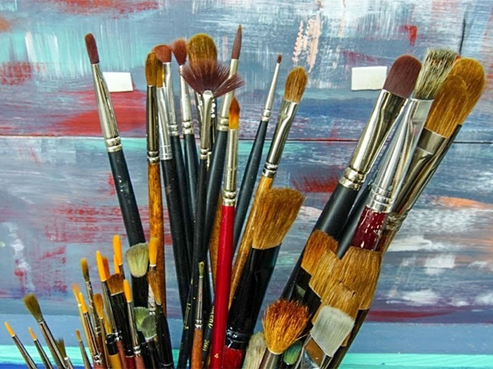
Brushes are indispensable for painting, which ranks first among popular art branches. Watercolor brush sets, specially designed for those who use watercolor while painting, offer countless options for both professionals and students. Watercolor brushes, which can be used from preschool onwards, make it possible to paint comfortably on surfaces such as drawing paper and canvas. There are many brushes with different features in brush sets, such as sable brushes and synthetic brushes. While thin brush tips are used to emphasize details, you can easily paint surfaces with thick tips. In addition to the thinness of the brushes, features such as bristle type and density also significantly affect the texture obtained. In this context, sable hair brushes, which have a very high water retention capacity, stand out. However, there are also places where synthetic brushes are preferred. Let’s take a look at our article where you can find answers to many questions such as sable brush price, synthetic brush price, where is sable brush used and where is synthetic brush used.
Special Brush Models for Different Needs
The structure of painting brushes varies according to the type of paint to be used, so when purchasing a brush, you should choose models that are suitable for the technique you will use. Brushes of different thicknesses and shapes are needed when painting. The thin, thick, flat, round or flat brush options in brush sets are qualified to meet all kinds of needs. Brushes are available in models such as side cut, flat cut, fan, round, flat, cat tongue, depending on the cut shapes of their bristles. Brushes with different cuts also have alternatives in different thicknesses.
Thin brushes, also known as toning brushes, are ideal for detail drawings and soft transitions. Ground brushes, on the other hand, are perfect for obtaining aesthetic textures with their thick tips and wavy structures. Having more than one frequently used detail and surface brush in the purchased set also provides the opportunity to use different colors at the same time. This ensures that the colors do not mix and the desired tone is achieved.
What are the Brush Types According to Bristle Structure?
Watercolor brushes consist of a handle and high parts in addition to the bristle section. Although the handle and ferrule are important for proper grip, the quality of the brush is mostly determined by the bristle structure. High-quality brushes made of sable hair produce more functional and aesthetic results. In addition to natural sable hair, which has a soft structure, there are also synthetic products that resemble this hair. Especially in small-tipped detail brushes, the natural and soft structure of sable hair provides extremely effective and efficient use.
You can buy brushes with synthetic bristles at much more affordable prices, however, it is more difficult to achieve results as natural as sable hair. The natural hairs of animals such as sable, squirrel, and horse hold much more paint and transfer it to the paper thanks to their surface structures with micro indentations and protrusions. The disadvantage of natural bristles is that they wear out more quickly and do not last as long as synthetic products. Detail brushes are generally preferred with natural bristles, while surface brushes are preferred with synthetic bristles.
What are the Uses of Different Types of Brushes?
Art brushes have many different types of bristle properties. Bristles are generally determined according to their suitability for the chemical structure of the paint. For example, oil paint requires flexible but durable bristles. Therefore, oil paint brush bristles should be more solid and thick. Since acrylic paint is not as hard as oil paint, slightly thinner bristles can be used in this technique. Watercolor paint, on the other hand, requires very soft bristles that can hold a lot of water because it is a more delicate paint.
Brushes made of animal hair are more expensive than synthetics, but their paint retention capacity and ease of application are at a high level. For example, sable hair brushes have indispensable features for watercolor works. However, synthetic brushes have also made significant progress since they were first produced and have reached a quality level that is no less than brushes made of natural bristles. In addition, it is easier for the brush tip to return to its former smooth state after applications made by pressing on the painting surface in synthetic brushes than in brushes made of natural bristles. Professional painters generally use both natural and synthetic bristles together.
What are the Features of Sable Brushes?
The most important feature of sable brushes is that the water retention capacity of sable hairs is much higher than synthetics. As such, brushes made of sable hair hold more paint. The most popular sable brushes are those made from the hair of the “Kolonsky sable”. Among natural bristle brushes, sable brushes are the most preferred today. Compared to others, these brushes are quite soft and due to these features, they do not leave brush marks during color transitions. They do not.
Sable brushes are the most ideal brushes for creating textureless surfaces and softening color transitions. Since they do not leave a mark, they produce extremely successful results especially in sky drawings and effects.
On the other hand, sable brushes are a bit expensive due to both their features and their high demand. For this reason, the most imitated brushes on the market are again sable brushes. In fact, it is quite difficult to distinguish a well-imitated sable brush from the original. Original sable brushes need to be collected at the tip and become as thin as a pin when they come into contact with water or paint. For this reason, sable brushes are the most suitable painting brushes for very fine drawings. In addition, the colors of imitation sable brushes are lighter and orange, while the originals are more matte.
What are the Features of Synthetic Brushes?
Synthetic brushes are brushes with bristles made of nylon and/or polyester instead of natural bristles. They are used when applying acrylic/water-based paints. Since they are synthetic, their bristles do not absorb water. In this way, it is possible to achieve an even finish. They are easily cleaned and can be easily kept in water because they do not absorb water. The life of synthetic paint brushes is much longer than natural bristle paint brushes and synthetic paint brushes are more durable than natural bristle brushes.V


