
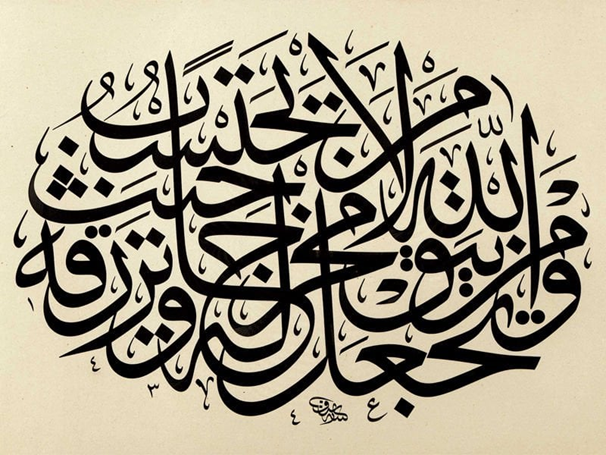
Ebru art is a decorative art performed by transferring patterns created by specially prepared paints onto water condensed using tragacanth onto paper. While visually pleasing colors, motifs and patterns emerge, magnificent works that should be preserved for many years are also formed. Among the elements to be considered while performing Ebru art; room temperature, quality of paints and brushes used can be listed. Ebru art, just like calligraphy, is an effective effort in reducing stress, based on manual skill and creativity.
What are the Types of Ebru?
As in many other branches of art, Ebru art also has its own types. Among these; it is possible to list battal ebru applied before doing all ebru varieties, tidal ebru consisting of lines created opposite to the edges of the boat, nightingale’s nest ebru containing spiral circles, shawl ebru with curved ends, comb ebru, hatip ebru and flower ebru. You can read our article for more information about the types of marbling.
What are the materials required for marbling art?
After answering the questions of what is marbling art and what are its types, let’s take a brief look at how it is done and which materials are used. In order to perform marbling art, we first need to obtain all the necessary materials completely. The quality of the materials will mean that the work that will be produced will also be of high quality. If we need to list the materials required for marbling art;
Paper: In marbling art, papers with very good absorbency, non-shiny and often obtained from first quality pulp are used.
Water: Water should be lime-free and rested. Tap water can also be used if it is good. Rainwater was used in the past.
Earth Paint: The paints used for the performance of marbling art are prepared from soil. Today, ready-to-grind, powdered paints are mostly used.
Gall: Gall is often obtained from the gall bladders of cattle. The gall collected in a container is kept in boiling water using the bain-marie method for 20 minutes. It is sold ready-made today.
Horse Hair or Rose Branch: Horse hair, which is preferred for use in brush making, is usually obtained from the tails of older horses. However, mane hair is also suitable for use. The reason why rose branches are used in brushes is that the branch is flexible and does not easily mold.
Boat: It is the name given to the container in which tragacanth mixed with water is placed.
How is Ebru Art Done?
In order to perform Ebru art, the materials mentioned above must first be obtained in full. First, the inside of the boat is filled with tragacanth water and the appropriate consistency is tried to be obtained. The ideal is to put 2 tablespoons of tragacanth in 2 liters of water. This mixture is left for 2 days and then filtered with a cheesecloth. This prepared mixture can be stored in a container to be used at the desired time.
Then, the desired color is created with soil paint and gall is added and mixed. It is left to stand for 15 days or a month. After this part, the truly enjoyable part of ebru art begins.
After the necessary materials are prepared, the previously prepared tragacanth water is poured into the basin. The colors to be used are dropped into the water with a brush. The colors create a different shape in the water with each brush drop. Finally, the paper is covered over the basin and pulled out in one go and left to dry.
History of Ebru Art
It is not known exactly in which country this art emerged. However, it is thought to have been done in eastern countries for decorative purposes. Different Iranian sources state that it emerged in Indian lands. According to other sources, it is stated that it emerged in the city of Bukhara in Turkestan and reached the Ottoman Empire via Iran. In the West, terms such as Turkish paper and marble paper are used for ebru art.
It is assumed that the history of ebru art dates back to the 9th and 10th centuries. It can be understood that this art developed with the invention of paper. Born in Turkestan and reaching Iran via the Silk Road in the early 16th century, it was called “ebri”. Since it contains shapes similar to cloud clusters, the Persian word Ebru, meaning “in deference to the cloud”, is the most accurate name for this art. The art of Ebru reached these countries thanks to European travelers. First seen in Germany, Ebru then spread to France and Italy. Over time, the art reached America and England, and was shaped within the framework of each country’s own understanding of art. The first documented example of Ebru belongs to the 16th century.


