
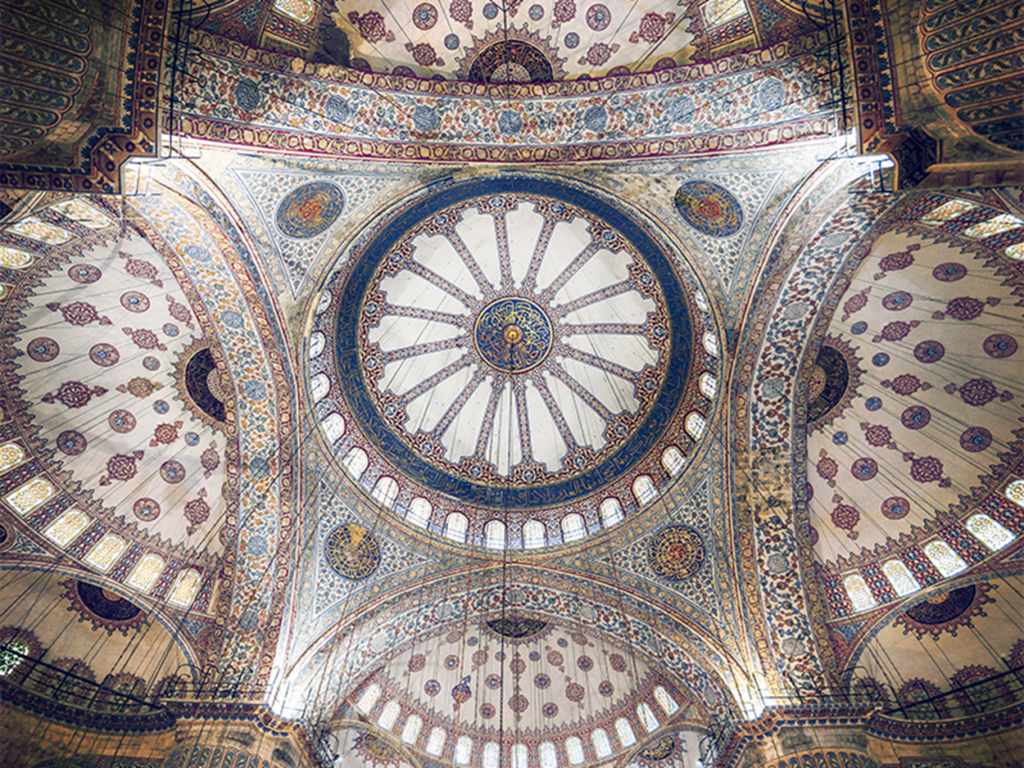
What is the art of illumination?
The word illumination is derived from the Arabic root zeheb, meaning gold, and means ‘to make gold’. Today, illumination is the name given to book decoration arts of Islamic origin, but it is essentially an art form in which intercultural interaction can be seen intensely. Men who perform the art of illumination are called zelehhips, and women are called zelehibes. Illuminations are hand-written books, usually painted and decorated with precious metals such as gold or silver. Their pages are usually made of animal skin, usually calf, sheep or goat. Illuminations were historically produced between 1100 and 1600, and their first creators were monasteries. The elites of the period also wanted these illustrative works for their personal libraries, encouraging the formation of special workshops that flourished in French and Italian cities between the 13th and 15th centuries. The decline of the illuminated manuscript tradition coincided with the mass production of printed texts and the increasing number of literate people who wanted both secular and religious books.
Illuminations come in a variety of sizes, depending on their intended use. They range in size from very large manuscripts to palm-sized prayer books.
How are illuminations preserved?
The paint used to illuminate manuscripts in illuminations can sometimes separate from the parchment. Using a microscope, the conservator aligns and reattaches the fragile flakes of paint. Photographs and written documentation of the treatment allow future caretakers to understand where sensitive areas are and how they were cared for in the past.
Attributing illuminations
Curators and conservators often work together to study an artist’s style, techniques, and choice of materials. Looking at works of art under a microscope can reveal details too small to see with the naked eye.
Storing illuminations
Individual manuscript pages are stored on protective window mats, shown above, to keep their fragile painted surfaces safe. The mats are placed in sturdy boxes in monitored storage areas that maintain ideal temperature and relative humidity. A stable climate is especially important for illuminated manuscripts, as animal skin expands and contracts easily in fluctuating humidity.
Displaying Illuminations
Knowing what materials and techniques artists used helps conservators determine if objects are particularly fragile or sensitive to light, moisture, or contaminants. Limiting the length of exhibitions for delicate objects ensures that future generations can experience their wonders.
Protecting works of art from exposure to light is a priority for their long-term preservation. Conservators work closely with curators and scientists to create exhibition guidelines that call for low light levels and short exposure times.
Conservators work with framers to create climate-resistant enclosures that protect works of art from pollutants, fluctuating temperatures, and humidity during exhibition. Sealed packages also ensure that works are protected during travel and can be displayed in other institutions.
Illumination Material Kits
Gold: The primary material for illumination art. Today, illuminationists obtain gold ready-made in the form of foils. In the past, gold had to go through various processes to be turned into leaf, and the gold pieces between the fat-free lamb skins were crushed by using special hammers. Preparing Ottoman gold in this way was very difficult and tiring. This work was done by gold leaf makers, and bookbinders crushed these leaves and prepared them for the gilders. Today, the gilders themselves crush the gold that was supplied ready-made in the form of a book. Brushes: Brushes used in illumination are named according to where they are used. Professional gilders today use ready-made brushes made of sable hair. It is said that the brushes used in the past were taken from the nape of kittens or sables; it is also said that they were made with feathers taken from the nape or wingtip of the woodcock bird, but it is not known for sure. Tahrir brush; This brush, which is used only for drawing tahrir, has a special importance for the gilder. It should be very thin and have a regular tip. Ground brush; its thickness varies according to the size of the ground. Gold brush; brushes of different thicknesses used in gold application. Separate brushes are used for yellow and green gold.
Sculpting: After gold is used in illumination, it is polished to remove the appearance of paint. In this polishing, zer stencil is used. There are two types of stencils: paper stencil and zer stencil. Zer stencil; agate stencil used for polishing gold. Pointed stencil; its tip is curved and flat pointed. It is used for polishing thin areas. Flat stencil; a stencil with a flat tip, used for polishing larger areas. There are three types of paper stencil. Lighter stencil; from both sides
a rolling pin shaped stamp made of wood used by holding. This stone is Suleymaniye stone, jade or agate. Glass stamp; is the size of an egg and made of glass. Insect stamp; is made of the shells of sea insects.
Dyes: The dyes used in our old illumination art were prepared from root and earth dyes. Earth dyes were crushed between two marbles with gum arabic and turned into a fine powder, molasses or glycerin was added to it and applied to the ground with a brush. The oldest known dyes are black made from beeswax, cerise white, lapus lazili and Lahor indigo navy blue. Today, illuminators use ready-made bottle dyes. These are various dyes such as (gouache) water color and acrylic, ecolin.
Illumination paper: The oldest of the papers used as a writing material in book arts is parchment. These were used especially in mushafs. Later, papyrus was seen. Papyrus gradually gave way to paper. The papers made by the Ottomans were highly sought after in Europe. Later, European paper spread throughout the Islamic world and Italian paper was especially preferred. Illuminators who knew the importance of paper in the art of illumination chose it meticulously. Before illumination, the paper is put through stages such as sizing, sealing and waiting for a long time, and is used in the most suitable condition.


