
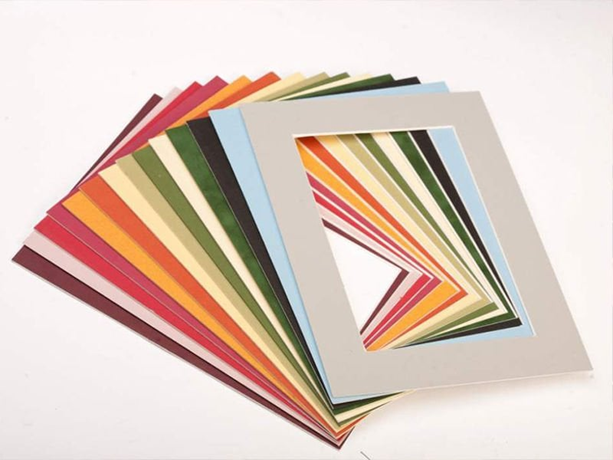
What is Passepartout?
Passepartout is a framing method where a small-sized image is placed in the space opened in the middle of a large-sized material; to create a sense of depth in the picture, to emphasize and beautify the picture. In other words, passepartout is the front frame between the frame and the original work.
Passepartout sits between the frame and the image to give the image a complete look. During the picture framing process, the passepartout also serves as an additional protection separating the work from the glass. Normal matte board is produced from wood pulp that is buffered during production. The core and back of the card are acid-free, but the surface is not paper.
Where and How is Passepartout Used?
Passepartout has two purposes: First, to prevent the image from touching the glass, and second, to frame the image and increase the attractiveness of the image. The cut in the passepartout is usually opened at an angle to prevent shadows from falling on the picture.
Making Passepartout
Making passepartout is the easiest way to protect watercolor paintings and ensure their longevity. If cardboard is to be used as a base, it is important to cut it according to the size of the picture. Because cardboards that protrude from the edges do not create a pleasant appearance. Whether it is white or colored cardboard, it can be cut so that it can be seen as a frame a few centimeters wide on all four sides of the picture. In this way, it increases the effect and emphasis of the picture. It is also possible to use the cardboard as a frame by opening the middle. The hole in the middle of this frame, which we call passe-partout, is generally half or one centimeter smaller than the picture.
It is also possible to glass watercolor paintings that will be hung or exhibited on the wall. For this, a clean glass the size of the picture and a cardboard of the same size are cut. The picture is placed between the cardboard and the glass and the edges are wrapped with a glued strip and glued.
Is It Easy to Make a Passe-partout?
Making a passe-partout is an easy method, although it varies depending on the materials you have. You can do it by just watching videos that show how to make a passe-partout.
What are the Materials for Making a Passe-partout?
The materials to be used to make a passe-partout are cardboard for the background, a picture, a ruler, glue, scissors and a pencil. It is quite easy to make a passepartout at home, but if you want more professional solutions, you can look at our passepartout frame models on the Vera Sanat website.
How to Make a Passepartout?
If you are wondering how to make a passepartout, let’s take a look at easy passepartout making together.
First, the distance between the cardboard and the image is adjusted. We can say that approximately 5 cm from the edges is ideal. If we are going to stick a label on the bottom or write your name, you can keep the area here wider. After adjusting it to be 5 cm from the edges, points are determined for all edges with the help of a ruler. Then, the image is placed on the background and glue is applied to the corners to keep it fixed.
After the image is pasted, you can cut the excess on the cardboard with scissors. Then you can glue the other corners between the image and the background. You can prefer non-liquid adhesives so that it does not leave stains when applying the adhesive.
What is a Frame Passepartout?
Frame passepartout is one of the framing methods used to make the image more emphasized and more distinct by creating a gap after the image. If you want to get professional support for your visual works, you can visit Vera Sanat website and get the highest quality and most professional frames at affordable prices.
What Does Passepartout Cardboard Mean?
Passepartout cardboard is a heavy, paper-based cardboard material that is pre-arranged and used in picture framing.


