EN
♡
The Masters

Auguste Salzmann

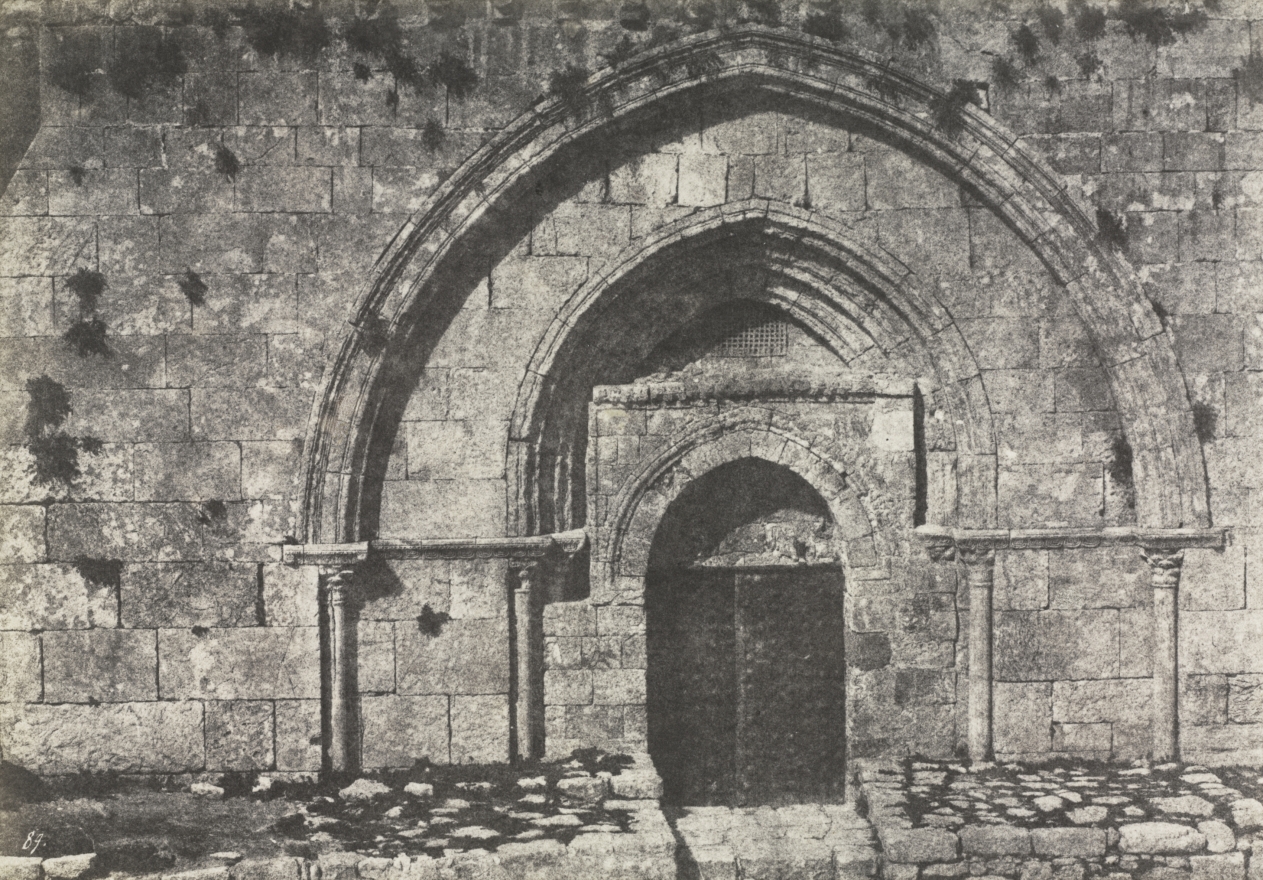
October 10, 2026 · 1 min read · Auguste Salzmann French, 1824-1872 Born into a family of painters in Ribeauvillé, Haut-Rhin in Alsace, Auguste Salzmann exhibited his canvases of landscapes in the Paris Salons of 1847, 1848, and 1850. This artistic background, along with his distinctive subject matter, contributed to Salzmann's photographic style. His photographs were exhibited only once during his lifetime, at the 1855 Exposition Universelle in Paris. Primarily interested in archaeology, he belonged to no photographic societies and considered his photographic work merely a tool. Salzmann visited Palestine (1850-51) and Jerusalem (1853), combining a project to record the monuments left by the Crusaders with another that tried to prove the work of scholar Louis-Félicien-Joseph Caignart de Saulcy, whose controversial historical and architectural theories involved the dating of buildings within the ancient city. The resulting images were published by Louis-Désiré Blanquart-Évrard in Jérusalem, époques judaique, romaine, chrétienne, arabe, explorations photographique par A. Salzmann (1854). In these extremely intense studies, light and form were used to animate the ancient buildings and landscape of the Middle East. A journey to Rhodes (185-67) led to another publication, Nécropole de Camiros, which documented a site Salzmann is believed to have discovered. Although much of the biographical information about Salzmann is unclear and remains a subject of debate, his work continues to be influential and admired. T.W.F.

Ask AI about this page
ChatGPTPerplexityClaudeGemini
Key takeaways

Auguste Salzmann French, 1824-1872 Born into a family of painters in Ribeauvillé, Haut-Rhin in Alsace, Auguste Salzmann exhibited his canvases of landscapes in the Paris Salons of 1847, 1848, and 1850. This artistic background, along with his distinctive subject matter, contributed to Salzmann's photographic style.…

Auguste Salzmann French, 1824-1872

Born into a family of painters in Ribeauvillé, Haut-Rhin in Alsace, Auguste Salzmann exhibited his canvases of landscapes in the Paris Salons of 1847, 1848, and 1850. This artistic background, along with his distinctive subject matter, contributed to Salzmann's photographic style. His photographs were exhibited only once during his lifetime, at the 1855 Exposition Universelle in Paris. Primarily interested in archaeology, he belonged to no photographic societies and considered his photographic work merely a tool.
Salzmann visited Palestine (1850-51) and Jerusalem (1853), combining a project to record the monuments left by the Crusaders with another that tried to prove the work of scholar Louis-Félicien-Joseph Caignart de Saulcy, whose controversial historical and architectural theories involved the dating of buildings within the ancient city. The resulting images were published by Louis-Désiré Blanquart-Évrard in Jérusalem, époques judaique, romaine, chrétienne, arabe, explorations photographique par A. Salzmann (1854). In these extremely intense studies, light and form were used to animate the ancient buildings and landscape of the Middle East.
A journey to Rhodes (185-67) led to another publication, Nécropole de Camiros, which documented a site Salzmann is believed to have discovered. Although much of the biographical information about Salzmann is unclear and remains a subject of debate, his work continues to be influential and admired. T.W.F.

Works

Sell with Matchless Pieces

Consign a singular work to the world’s house of illumination, miniature and calligraphy.

Start Selling

The Matchless Letter

Sale previews, new discoveries in illumination and miniature, and private-room invitations.