EN
♡
The Masters

Jean-Jacques Heilmann

October 10, 2026 · 1 min read · Jean-Jacques Heilmann French, 1822-1859 Originally from Mulhouse, J. J. Heilmann made his living as a photographer, publisher, and printer in Pau, a town in southern France near the northern border of the Pyrenees. Most of his work was produced between 1852-57. Using rapid collodion plates perfected by Adolphe Bertsch and Farnham Maxwell Lyte, Heilmann also made calotypes and ivory types of considerable sophistication. In 1853 he developed a mechanism for enlarging negatives. Heilmann frequently photographed the landscape of the Pyrenees, although he also did portraits, urban scenes, and photographic reproductions of paintings of Alsace and Pau. His images often resemble those of Lyte and John Stewart, British photographers whose scenes of man and nature were produced in the Pyrenees during the same era. Heilmann's photographs, however, have a more defined composition. His use of figures, animals, vehicles, and natural elements reveals an interest in depicting civilized man in a primitive setting. A founding member of the Société française de photographie, Heilmann was also affiliated with the Photographic Club of Great Britain. He exhibited his work at the 1855 Exposition Universelle in Paris. T.W.F.
Ask AI about this page
ChatGPTPerplexityClaudeGemini
Key takeaways

Jean-Jacques Heilmann French, 1822-1859 Originally from Mulhouse, J. J. Heilmann made his living as a photographer, publisher, and printer in Pau, a town in southern France near the northern border of the Pyrenees. Most of his work was produced between 1852-57. Using rapid collodion plates…

Jean-Jacques Heilmann French, 1822-1859

Originally from Mulhouse, J. J. Heilmann made his living as a photographer, publisher, and printer in Pau, a town in southern France near the northern border of the Pyrenees. Most of his work was produced between 1852-57. Using rapid collodion plates perfected by Adolphe Bertsch and Farnham Maxwell Lyte, Heilmann also made calotypes and ivory types of considerable sophistication. In 1853 he developed a mechanism for enlarging negatives.
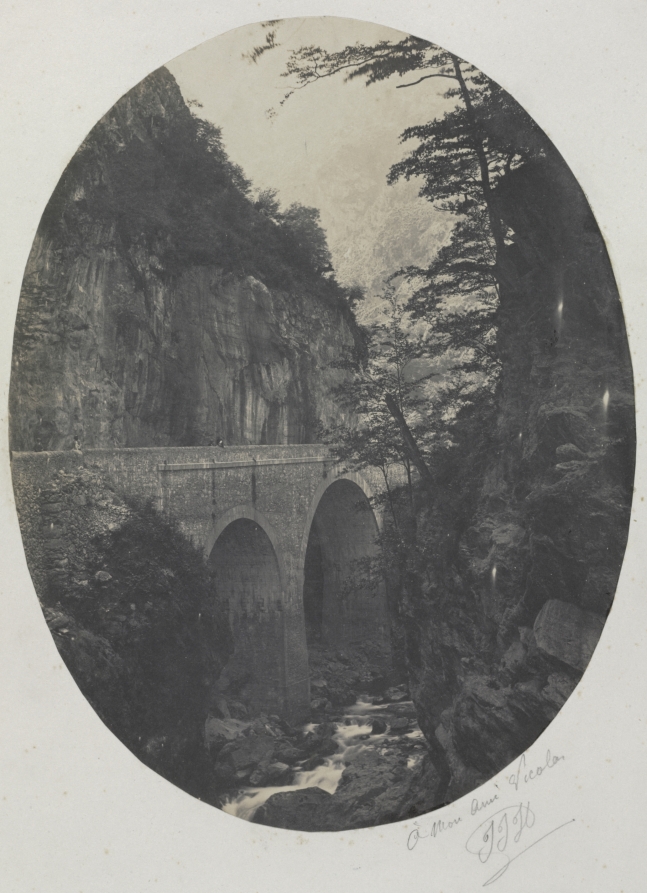
Heilmann frequently photographed the landscape of the Pyrenees, although he also did portraits, urban scenes, and photographic reproductions of paintings of Alsace and Pau. His images often resemble those of Lyte and John Stewart, British photographers whose scenes of man and nature were produced in the Pyrenees during the same era. Heilmann's photographs, however, have a more defined composition. His use of figures, animals, vehicles, and natural elements reveals an interest in depicting civilized man in a primitive setting. A founding member of the Société française de photographie, Heilmann was also affiliated with the Photographic Club of Great Britain. He exhibited his work at the 1855 Exposition Universelle in Paris. T.W.F.

Works

Works by Jean-Jacques Heilmann

Sell with Matchless Pieces

Consign a singular work to the world’s house of illumination, miniature and calligraphy.

Start Selling

The Matchless Letter

Sale previews, new discoveries in illumination and miniature, and private-room invitations.