Click image to view full screen

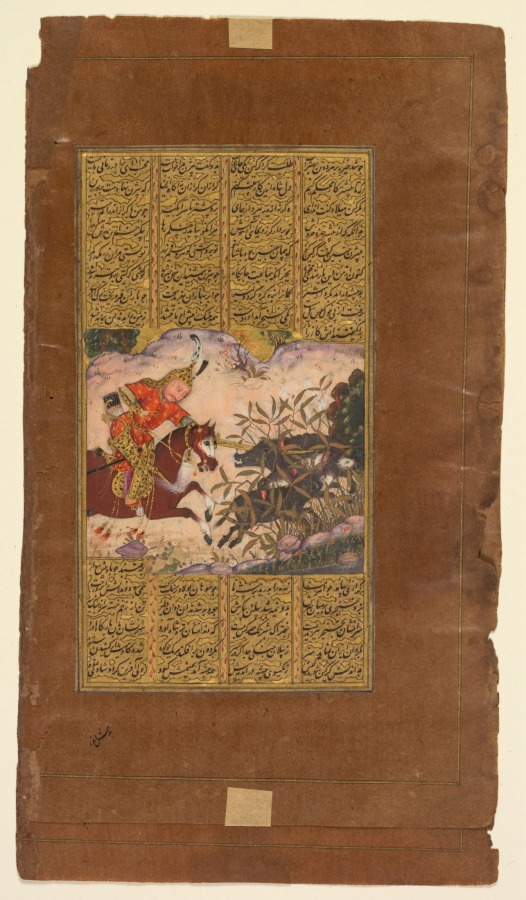
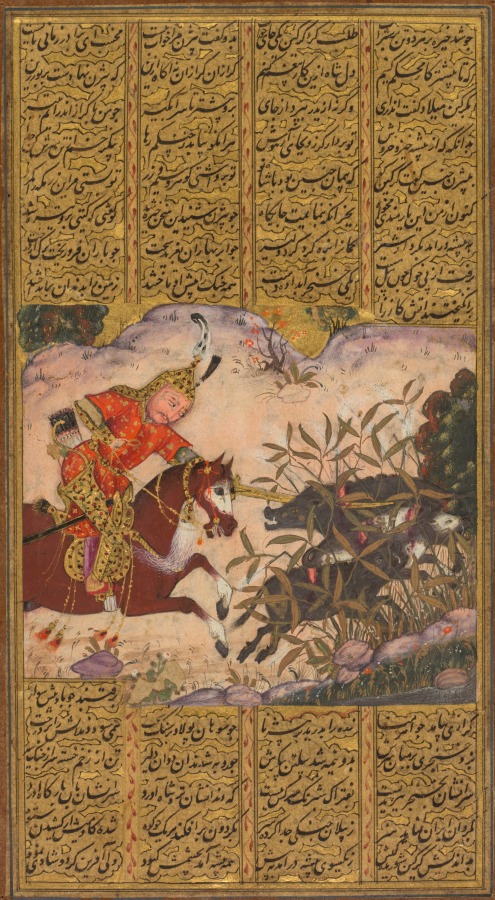
Bijan killing the wild boars of Irman, from a Shah-nama (Book of Kings) of Firdausi (Persian, about 934–1020)
✓ Authenticity guarantee · ✓ Specialist condition report · ✓ Insured worldwide shipping · ✓ Private-room viewing
This illustrated page from a <em>Shah-nama</em> depicts the first adventure of the hero Bijan, son of an Iranian knight. When reports arrived at the king’s court of wild boars ravaging the borderlands between the enemy realms of Iran and Turan, Bijan volunteered to hunt and kill the beasts, much to the chagrin of his father, who doubted his young son’s ability to navigate the politically volatile situation. The fearless Bijan is shown on horseback as he singlehandedly strikes the bodies of the boars in the brush. After overzealously celebrating his success, Bijan must be rescued from a pit by Rustam. This early manuscript from the Deccan made for the sultan of Bijapur is characterized by glowing colors and lavish use of gold.
| Artist / Maker | India, Bijapur, Deccan |
|---|---|
| Date | c. 1610 |
| Culture / Origin | India, Bijapur, Deccan |
| Medium | Gum tempera, ink, and gold on paper |
| Dimensions | Page: 20.3 x 12 cm (8 x 4 3/4 in.); Page: 20.5 x 12.4 cm (8 1/16 x 4 7/8 in.) |
| Department | Indian and Southeast Asian Art |
| Type | Painting |
About the Artist
Provenance & Source
Image & data: Cleveland Museum of Art, CC0 / Public Domain.
Condition
A detailed condition report and high-resolution photography are available from our specialists in advance of the sale.
Shipping & Collection
Fine-art shipping with climate control and full insurance to over 120 countries; collection by appointment.
Buying at Matchless Pieces
Register, verify your identity, and bid online or in a private room. Buyer’s premium and taxes are shown before you confirm.
You May Also Like
India, Bijapur, Deccan
Bijan killing the wild boars of Irman, from a Shah-nama (Book of Kings) of Firdausi (Persian, about 934–1020), (recto)
India, Bijapur, Deccan
Text of Rustam and Suhrab, from the Shah-nama of Firdausi (Persian, c. 934–1020) (recto)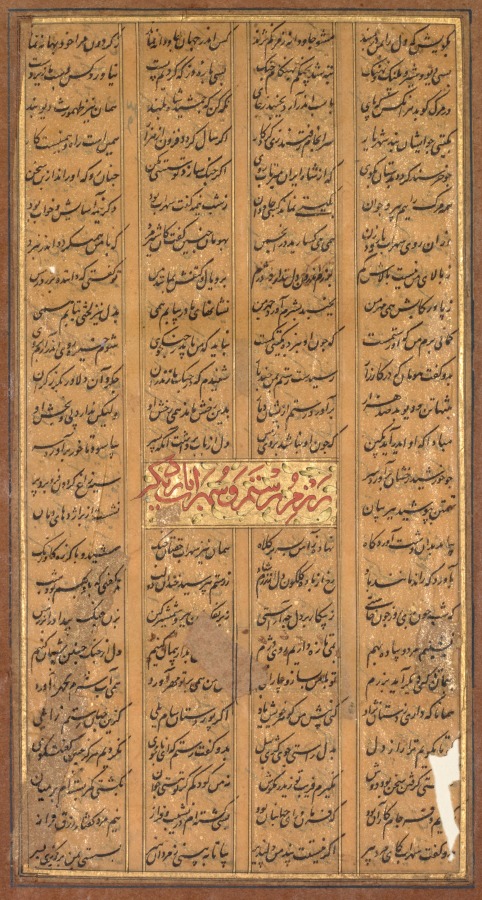
India, Bijapur, Deccan
Text of Rustam and Suhrab, from the Shah-nama of Firdausi (Persian, c. 934–1020) (verso)