Click image to view full screen

Buddhist Vestment (Kesa)
✓ Authenticity guarantee · ✓ Specialist condition report · ✓ Insured worldwide shipping · ✓ Private-room viewing
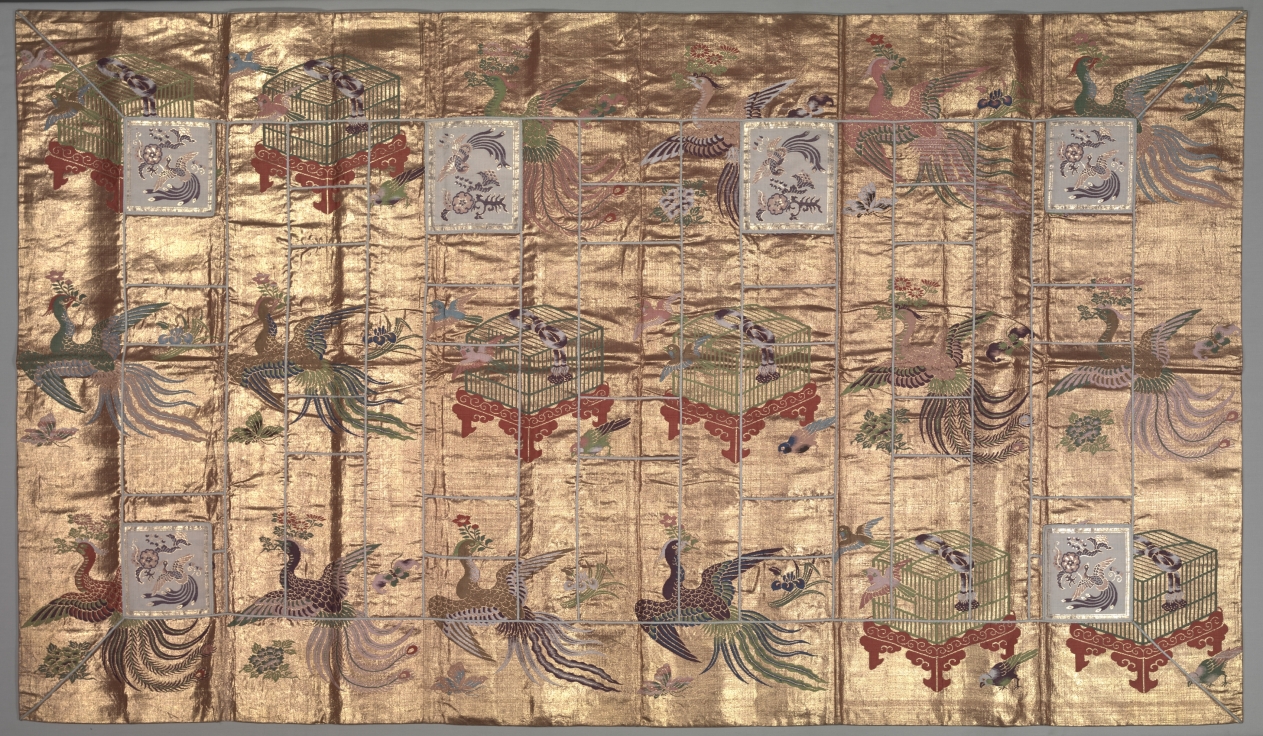
<em>Kesa </em>are Buddhist monastic robes that originated in India. The robes are named after the brown or saffron dye originally used in their production. The primary motif on this seven-paneled kesa is a long-tailed bird with a flower in its mouth. This motif was imported from Persia (present-day Iran) through China during the Nara period (710–794)and is interpreted as a positive symbol. The bird delivers happiness in its mouth.
| Artist / Maker | Japan, Meiji period (1868–1912) |
|---|---|
| Date | early 1900s |
| Culture / Origin | Japan, Meiji period (1868–1912) |
| Medium | silk with supplementary weft, brocaded; metal thread |
| Dimensions | Overall: 119.4 x 205.7 cm (47 x 81 in.) |
| Department | Textiles |
| Type | Garment |
About the Artist
Provenance & Source
Image & data: Cleveland Museum of Art, CC0 / Public Domain.
Condition
A detailed condition report and high-resolution photography are available from our specialists in advance of the sale.
Shipping & Collection
Fine-art shipping with climate control and full insurance to over 120 countries; collection by appointment.
Buying at Matchless Pieces
Register, verify your identity, and bid online or in a private room. Buyer’s premium and taxes are shown before you confirm.


