Click image to view full screen

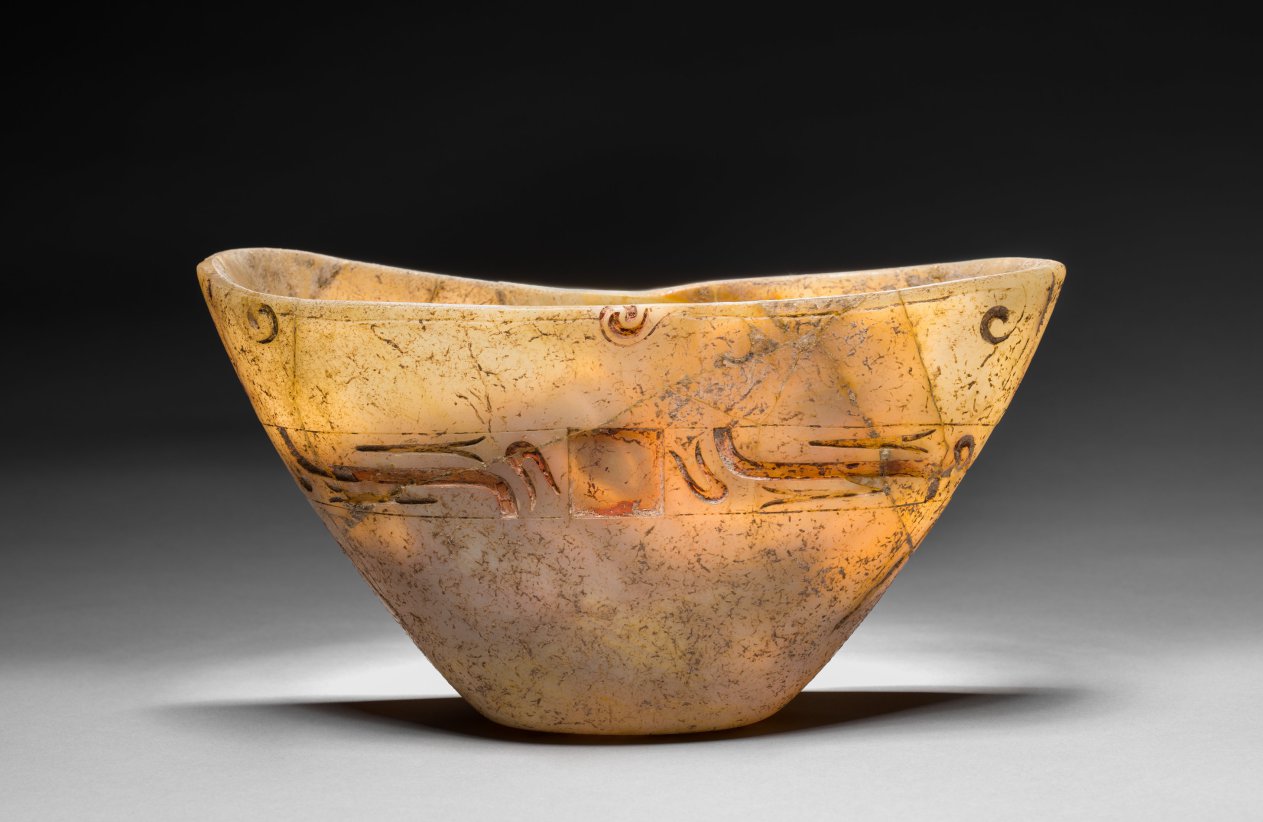
Carved Bowl
✓ Authenticity guarantee · ✓ Specialist condition report · ✓ Insured worldwide shipping · ✓ Private-room viewing
Containers made of translucent white travertine, known among the later Aztecs as <em>tecali</em>, are rare in Olmec artistic production. The shape of this elegant example, its rim pinched inward at the center, may refer to a squash. The meaning of the deeply carved abstract motifs, which retain traces of red pigment, is unknown. The bowl is said to have been found in a burial cache that included an Olmec figurine, a hematite mirror, and jade ornaments in Guerrero, Mexico.
| Artist / Maker | Anonymous, Formative Period |
|---|---|
| Date | 1200–300 BCE |
| Culture / Origin | Mesoamerica, reportedly the Tepecoacuilco River Valley, Guerrero, Olmec style (1200-300 BC), Formative Period |
| Medium | stone (travertine) |
| Dimensions | Overall: 13.3 x 23.5 x 10.2 cm (5 1/4 x 9 1/4 x 4 in.) |
| Department | Art of the Americas |
| Type | Stone |
About the Artist
Provenance & Source
Image & data: Cleveland Museum of Art, CC0 / Public Domain.
Condition
A detailed condition report and high-resolution photography are available from our specialists in advance of the sale.
Shipping & Collection
Fine-art shipping with climate control and full insurance to over 120 countries; collection by appointment.
Buying at Matchless Pieces
Register, verify your identity, and bid online or in a private room. Buyer’s premium and taxes are shown before you confirm.


