Click image to view full screen

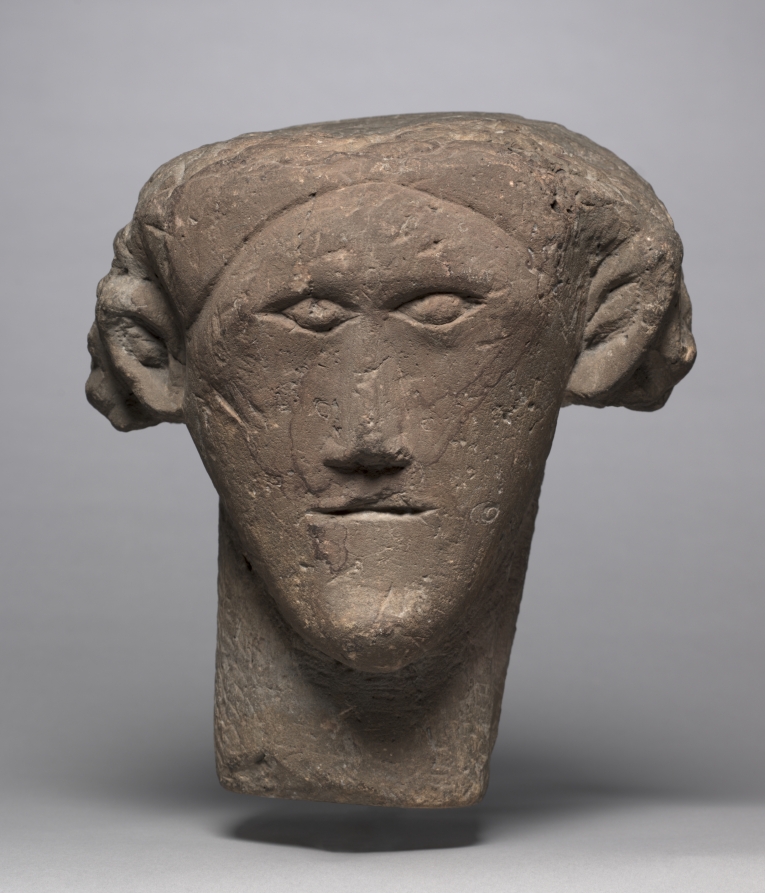
Celtic Head
✓ Authenticity guarantee · ✓ Specialist condition report · ✓ Insured worldwide shipping · ✓ Private-room viewing
This stone head has never been attached to a torso. It is known from ancient literary sources that the Celts, who originally occupied most of northern Europe from Hungary to the British Isles, practiced ritualistic veneration of the human head. For the Celts, the human head represented the seat of mankind’s magical energy. Stone heads similar to this one have survived in large numbers, especially in the upland regions of northern England (the Pennines, the Peak District, and Cumbria) where this one was undoubtedly made by British Celts during the Roman occupation. Such stone heads were probably placed in religious shrines or grottos generally associated with springs, well heads, or natural landmarks for ritual veneration.
| Artist / Maker | Anonymous, 2nd-3rd centuries |
|---|---|
| Date | 100–300 CE |
| Culture / Origin | Northern England (Romano-British), Migration period, 2nd-3rd centuries |
| Medium | sandstone with traces of original red paint |
| Dimensions | Overall: 30 x 31 x 24 cm (11 13/16 x 12 3/16 x 9 7/16 in.) |
| Department | Medieval Art |
| Type | Sculpture |
About the Artist
Provenance & Source
Image & data: Cleveland Museum of Art, CC0 / Public Domain.
Condition
A detailed condition report and high-resolution photography are available from our specialists in advance of the sale.
Shipping & Collection
Fine-art shipping with climate control and full insurance to over 120 countries; collection by appointment.
Buying at Matchless Pieces
Register, verify your identity, and bid online or in a private room. Buyer’s premium and taxes are shown before you confirm.