Click image to view full screen

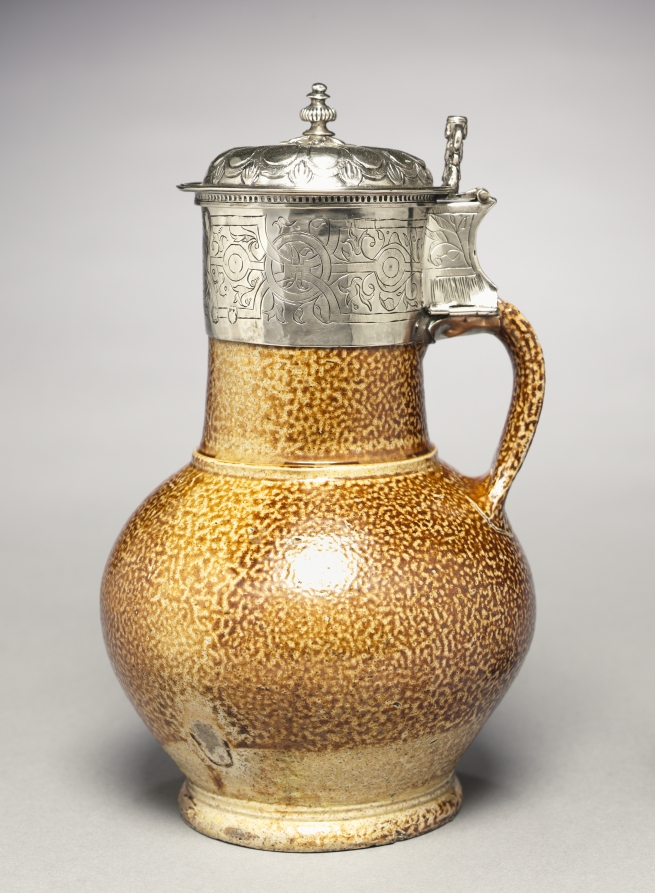
Covered Jug
✓ Authenticity guarantee · ✓ Specialist condition report · ✓ Insured worldwide shipping · ✓ Private-room viewing
German Stoneware The production and export of German stoneware reached its peak in the late 1500s. Prized for its durability and stone-like appearance, German stoneware became one of the most widely traded forms of pottery, even finding popularity in early America. The distinctive pebbly glass surface, resembling an orange peel, was achieved by introducing salt into the hot kiln during the firing process. This glaze gave clear definition to the coats of arms or other emblems that often formed the surface decoration on large works, usually jugs.
| Artist / Maker | Anonymous, 16th century |
|---|---|
| Date | c. 1570–1573 |
| Culture / Origin | Germany (jug) and England (mounts), 16th century |
| Medium | Tigerware, silver mount |
| Dimensions | Diameter of base: 22.2 x 8.4 cm (8 3/4 x 3 5/16 in.) |
| Department | Decorative Art and Design |
| Type | Ceramic |
About the Artist
Provenance & Source
Image & data: Cleveland Museum of Art, CC0 / Public Domain.
Condition
A detailed condition report and high-resolution photography are available from our specialists in advance of the sale.
Shipping & Collection
Fine-art shipping with climate control and full insurance to over 120 countries; collection by appointment.
Buying at Matchless Pieces
Register, verify your identity, and bid online or in a private room. Buyer’s premium and taxes are shown before you confirm.