Click image to view full screen

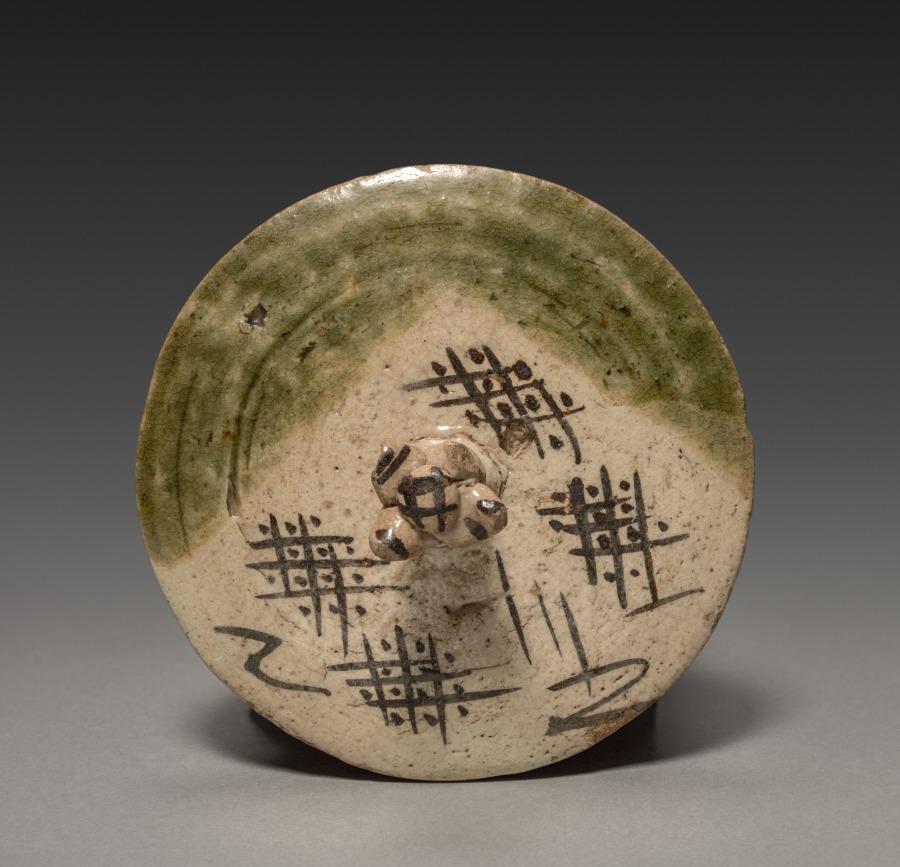
Ewer (Suichū) (lid)
✓ Authenticity guarantee · ✓ Specialist condition report · ✓ Insured worldwide shipping · ✓ Private-room viewing
This ewer was made to replenish the jar that holds water for rinsing teabowls and filling the iron kettle at tea gatherings. Highly abstracted pine trees, cascading ivy, stripes, and grids make up the designs in underglaze iron oxide, while the overall surface alternates between a transparent glaze and a green glaze characteristic of some Oribe tea wares.
| Artist / Maker | Japan, Momoyama period (1573–1615) |
|---|---|
| Date | early 1600s |
| Culture / Origin | Japan, Momoyama period (1573–1615) |
| Medium | Glazed stoneware with iron oxide underglaze slip (Mino ware, Oribe type) |
| Dimensions | Diameter of mouth: 12.7 cm (5 in.); Container: 21 cm (8 1/4 in.) |
| Department | Japanese Art |
| Type | Ceramic |
About the Artist
Provenance & Source
Image & data: Cleveland Museum of Art, CC0 / Public Domain.
Condition
A detailed condition report and high-resolution photography are available from our specialists in advance of the sale.
Shipping & Collection
Fine-art shipping with climate control and full insurance to over 120 countries; collection by appointment.
Buying at Matchless Pieces
Register, verify your identity, and bid online or in a private room. Buyer’s premium and taxes are shown before you confirm.