Click image to view full screen

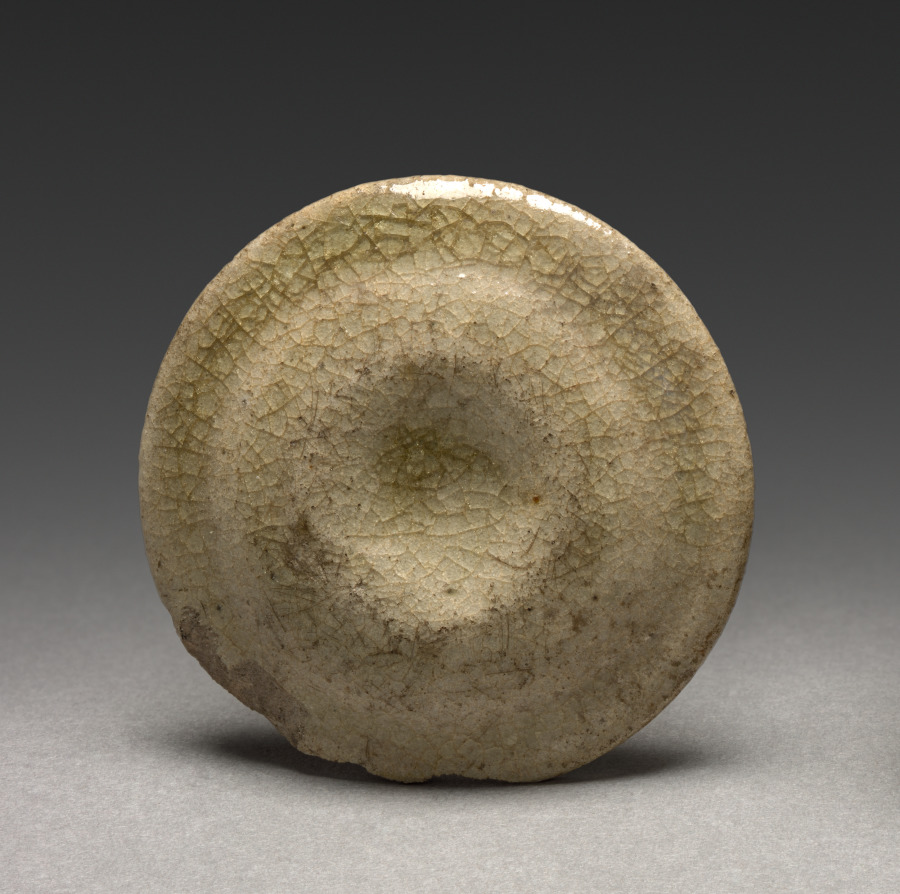
Incense Box (lid): Seto Ware
✓ Authenticity guarantee · ✓ Specialist condition report · ✓ Insured worldwide shipping · ✓ Private-room viewing
Old Seto, also called Koseto ware, was typically coated with an ash glaze in the mineral feldspar, which produced a yellow or grayish-green glaze. This palette appealed to medieval Buddhist priests and samurai alike. The practice of burning incense in religious, court, and domestic settings dates from the early 700s in Japan.
| Artist / Maker | Japan, Kamakura period (1185–1333) |
|---|---|
| Date | 1200s–1300s |
| Culture / Origin | Japan, Kamakura period (1185–1333) |
| Medium | glazed stoneware |
| Dimensions | Diameter: 6 cm (2 3/8 in.); Overall: 3.5 cm (1 3/8 in.) |
| Department | Japanese Art |
| Type | Ceramic |
About the Artist
Provenance & Source
Image & data: Cleveland Museum of Art, CC0 / Public Domain.
Condition
A detailed condition report and high-resolution photography are available from our specialists in advance of the sale.
Shipping & Collection
Fine-art shipping with climate control and full insurance to over 120 countries; collection by appointment.
Buying at Matchless Pieces
Register, verify your identity, and bid online or in a private room. Buyer’s premium and taxes are shown before you confirm.
You May Also Like

Japan, Kamakura period (1185–1333)
Scroll of Miscellaneous Notes written on a Calendar by Priest Seigen (verso)
Japan, Kamakura period (1185–1333)
Scroll of Miscellaneous Notes written on a Calendar by Priest Seigen (recto)
Japan, Kamakura period (1185–1333)
Amida (base)