Click image to view full screen

Offering Table
✓ Authenticity guarantee · ✓ Specialist condition report · ✓ Insured worldwide shipping · ✓ Private-room viewing
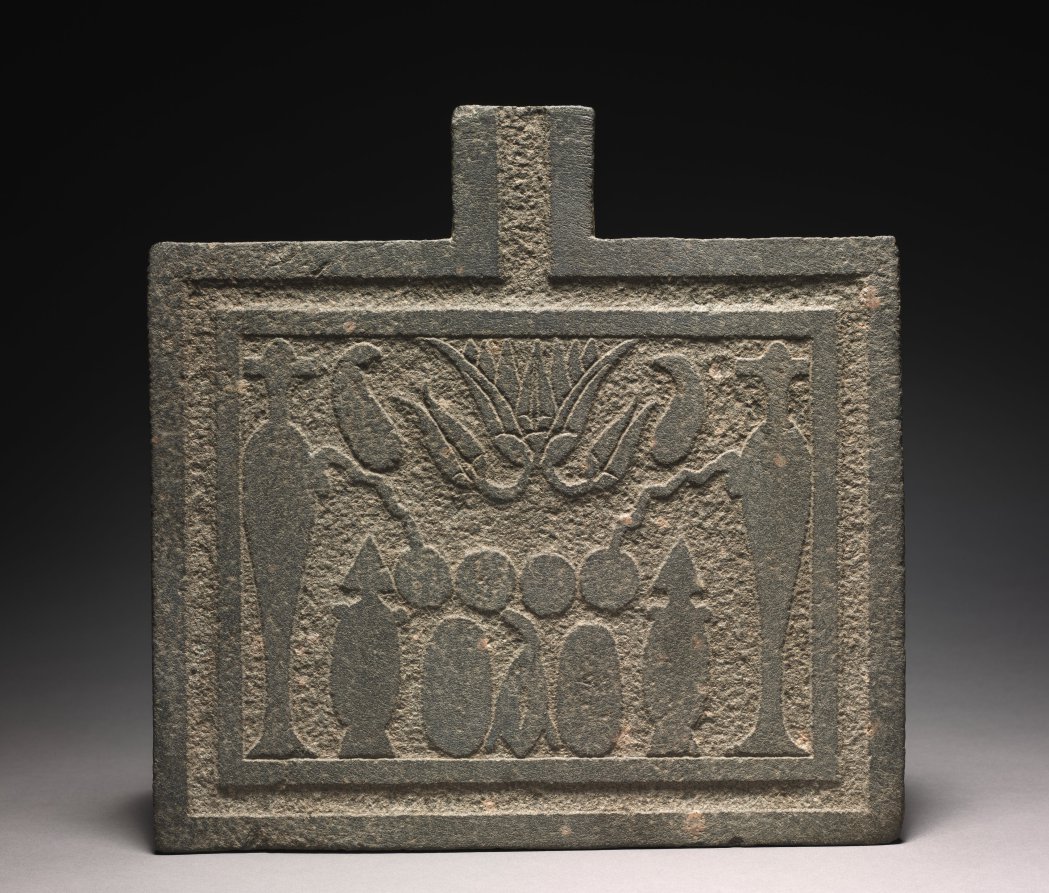
Offering tables were used in ancient Egyptian funerary rituals to create a connection between the realms of the living and the dead. Often located near or inside tombs, the table was placed flat in front of <em>ka</em> statues, figures designed to contain the life force of the dead, with the carved surface facing up. Water would be poured over the table, sustaining the dead with vitality. The carved relief displays images of libation jars, beer jars, fruit, bread, cucumbers, a trussed fowl, and a lotus flower. These foods were associated with the diet of the gods, emphasizing the deceased’s desire to become divine in the afterlife.
| Artist / Maker | Anonymous, Ptolemaic dynasty (305–30 BCE) |
|---|---|
| Date | 305–30 BCE |
| Culture / Origin | Egypt, Greco-Roman period (332 BCE–395 CE), Ptolemaic dynasty (305–30 BCE) |
| Medium | granodiorite |
| Dimensions | Overall: 34.6 x 35.2 x 7.2 cm (13 5/8 x 13 7/8 x 2 13/16 in.) |
| Department | Egyptian and Ancient Near Eastern Art |
| Type | Sculpture |
About the Artist
Provenance & Source
Image & data: Cleveland Museum of Art, CC0 / Public Domain.
Condition
A detailed condition report and high-resolution photography are available from our specialists in advance of the sale.
Shipping & Collection
Fine-art shipping with climate control and full insurance to over 120 countries; collection by appointment.
Buying at Matchless Pieces
Register, verify your identity, and bid online or in a private room. Buyer’s premium and taxes are shown before you confirm.


