Ottoman textiles are among the most opulent fabrics ever produced in the Islamic world. Woven in silk, often enriched with gilt and silvered metal thread, they clothed sultans, furnished palaces and served as diplomatic gifts. For collectors, they offer a vivid record of court design and a fascinating field of study.
Centres of Production
Bursa, the first major Ottoman capital, was the leading centre of silk weaving and a hub of the silk trade. Istanbul also hosted court workshops, and production was regulated to maintain quality, including standards for metal thread.
The principal luxury fabrics included kemha, a heavy brocaded silk, and çatma, a voided velvet whose raised pile creates a bold, sculptural pattern. Velvets were widely used for cushion covers, a form that survives in good numbers and is popular with collectors.
The Imperial Kaftan
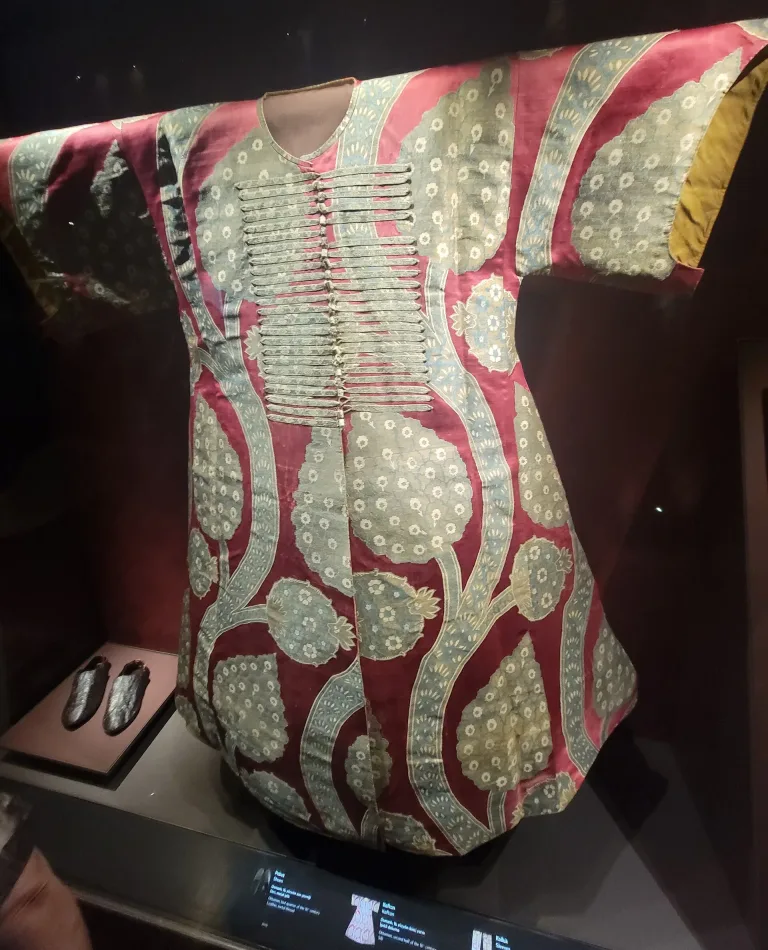
The kaftan was the principal garment of the Ottoman court. Robes of honour, known as hil’at, were presented to officials and envoys as marks of favour. Uniquely, many garments of the sultans were preserved after their deaths, and the Topkapı Palace collection remains the essential reference for this material.
Complete kaftans rarely appear on the market. Collectors more often encounter fragments, panels and cushion covers, which can nonetheless display the same patterns and weaving quality.
Motifs and Design Language
Ottoman textile design draws on the same court repertoire seen in Iznik ceramics and illumination. Common motifs include:
- Çintamani: three balls paired with wavy stripes, a motif of debated origin associated with strength and protection.
- Tulips and carnations: naturalistic flowers that flourished from the mid-sixteenth century.
- Ogival lattices: large repeating frames enclosing palmettes and crowns.
- Saz leaves: long, serrated leaves from the court style.
Assessing Condition
Silk is fragile, and age brings fading, pile loss, splits and tarnished metal thread. Evaluate the clarity of the design, the depth of colour and the extent of any reweaving or later backing. Earlier restorations can be acceptable, but they should be documented.
Light is the greatest enemy of dyes, so display should be limited and rotated. Store pieces flat or rolled, never folded along the same lines, and avoid direct contact with wood or acidic materials. Consult a professional textile conservator before cleaning, stitching or mounting.
Exploring the Field
Ottoman textiles reward patient study alongside other court arts. Browse our carpets and textiles category, and if you have a piece you wish to offer, our consignment team can advise on cataloguing and presentation.
Fragments, Panels and Furnishing Textiles
Because complete garments are so rare, much of the Ottoman textile market consists of smaller survivals. Velvet cushion covers, known as yastık, typically feature a central field with a row of lappets or arches at each end, and they are widely represented in museum collections.
Fragments cut from larger hangings or garments can also be rewarding. Their value depends on the quality of the weave, the strength of the design and how much of the pattern repeat survives. When assessing any fragment, ask whether it has been mounted, whether original selvedges remain, and whether later dye or stitching has been added. A clear understanding of how a fragment relates to its original object helps collectors appreciate it fully and describe it accurately.
Frequently Asked Questions
What are kemha and çatma?
Kemha is a luxurious silk brocade, often with metal-wrapped threads, while çatma is a voided silk velvet, frequently brocaded. Both were key luxury fabrics of the Ottoman Empire.
Where can I see imperial Ottoman kaftans?
The Topkapı Palace Museum in Istanbul holds a renowned collection of kaftans preserved from the wardrobes of the sultans, and major museums worldwide hold important Ottoman silks.
How should I store an Ottoman textile?
Store textiles flat or rolled on acid-free tubes, interleaved with acid-free tissue, in a dark, stable environment. Seek advice from a textile conservator before any cleaning or mounting.