Click image to view full screen

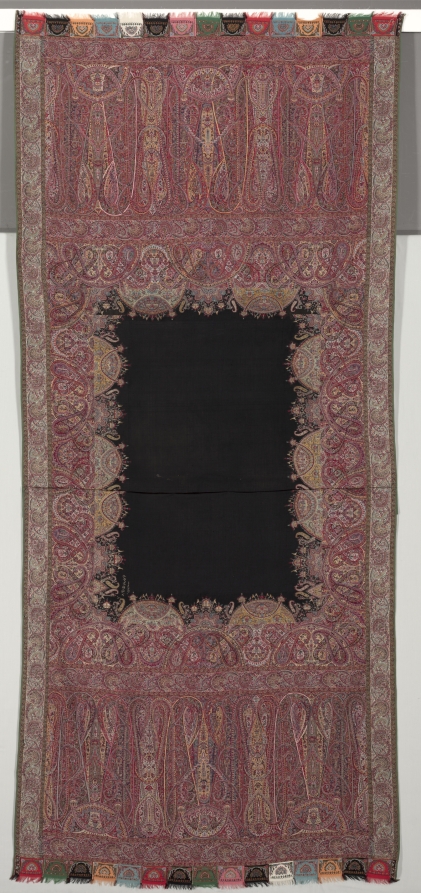
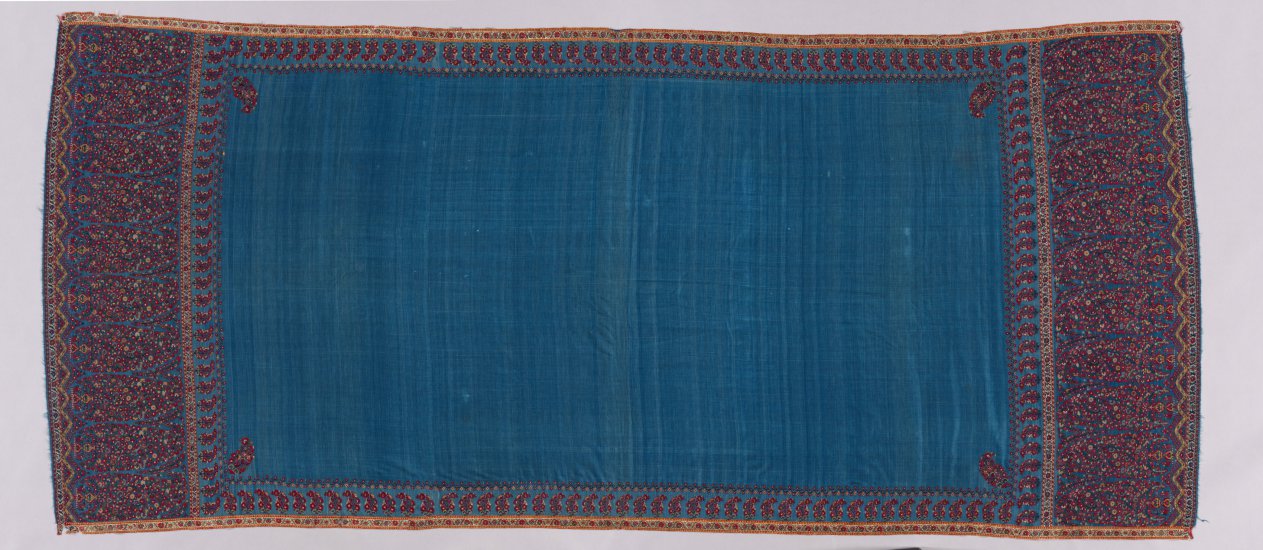
Shawl with boteh
✓ Authenticity guarantee · ✓ Specialist condition report · ✓ Insured worldwide shipping · ✓ Private-room viewing
Thousands of luxurious shawls imported from Kashmir, India, were status symbols that European-manufactured imitations could not equal. Those woven in Paisley, Scotland, gave rise to the popular term paisley. Their representation in portraits records the evolution of shawl fashions, which helps to date surviving examples. The coveted quality of Kashmir shawls was achieved with luxurious fine goat hair woven in twill tapestry to form small colorful blossoms. Such shawls are lightweight, supple, and warm. A plethora of blossoms arranged in small vases on stands form the large paisley or <em>boteh</em> motifs, while smaller versions enliven the sides of the field. Such floral displays evolved from blossoming plants possibly in 16th-century India.
| Artist / Maker | India, Kashmir |
|---|---|
| Date | 1820–1830 |
| Culture / Origin | India, Kashmir |
| Medium | 2/2 twill tapestry weave, double interlocked: wool, possibly pashmina |
| Dimensions | Overall: 325 x 136.5 cm (127 15/16 x 53 3/4 in.) |
| Department | Textiles |
| Type | Textile |
About the Artist
Provenance & Source
Image & data: Cleveland Museum of Art, CC0 / Public Domain.
Condition
A detailed condition report and high-resolution photography are available from our specialists in advance of the sale.
Shipping & Collection
Fine-art shipping with climate control and full insurance to over 120 countries; collection by appointment.
Buying at Matchless Pieces
Register, verify your identity, and bid online or in a private room. Buyer’s premium and taxes are shown before you confirm.