Click image to view full screen

Side Chair
✓ Authenticity guarantee · ✓ Specialist condition report · ✓ Insured worldwide shipping · ✓ Private-room viewing
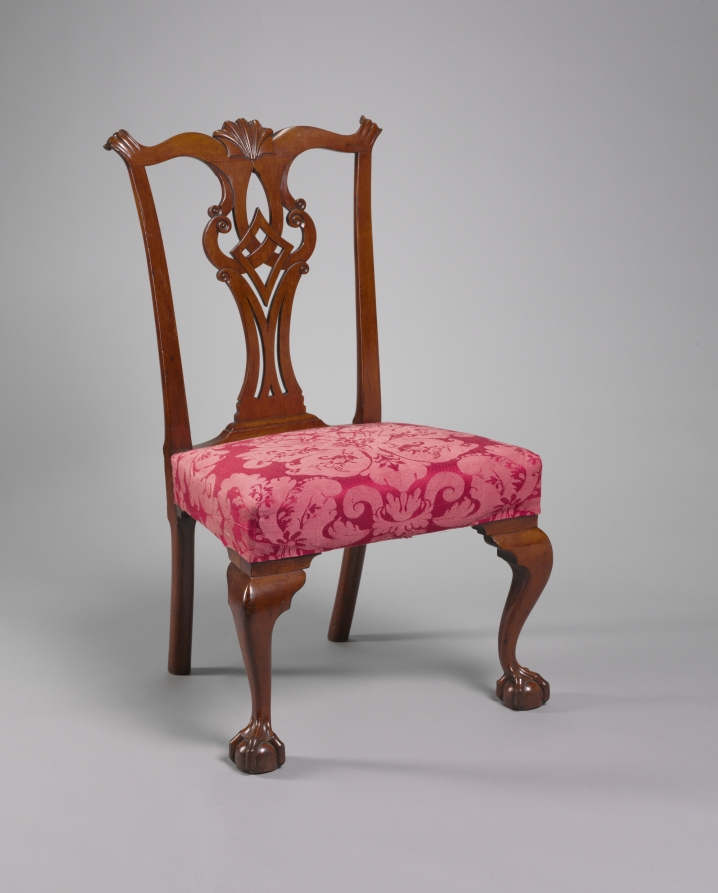
Before becoming one of the best known Connecticut furniture makers of the late 1700s, Eliphalet Chapin worked in New York City and Philadelphia. His furniture shows evidence of that experience. For example, the back of this chair has a splat design found on New York pieces, while the untapered rear legs and the shell carving on the crest rail are typical of Philadelphia workmanship. The use of cherry, however, is characteristic of Connecticut furniture. This chair comes from a set recorded in Chapin's account book as having been supplied to Ebenezer Grant to form part of the dowry of his daughter Anne, who married the Reverend John Marsh of Wethersfield, Connecticut, on December 6, 1775. The set was owned by their descendants until 1986.
| Artist / Maker | Eliphalet Chapin |
|---|---|
| Date | c. 1775 |
| Culture / Origin | America, Connecticut, East Windsor, 18th century |
| Medium | cherry |
| Dimensions | Overall: 96.8 x 59.1 x 51.1 cm (38 1/8 x 23 1/4 x 20 1/8 in.) |
| Department | Decorative Art and Design |
| Type | Furniture and woodwork |
About the Artist
Eliphalet Chapin (American, 1741–1807) Full biography →
Provenance & Source
Image & data: Cleveland Museum of Art, CC0 / Public Domain.
Condition
A detailed condition report and high-resolution photography are available from our specialists in advance of the sale.
Shipping & Collection
Fine-art shipping with climate control and full insurance to over 120 countries; collection by appointment.
Buying at Matchless Pieces
Register, verify your identity, and bid online or in a private room. Buyer’s premium and taxes are shown before you confirm.


