Click image to view full screen

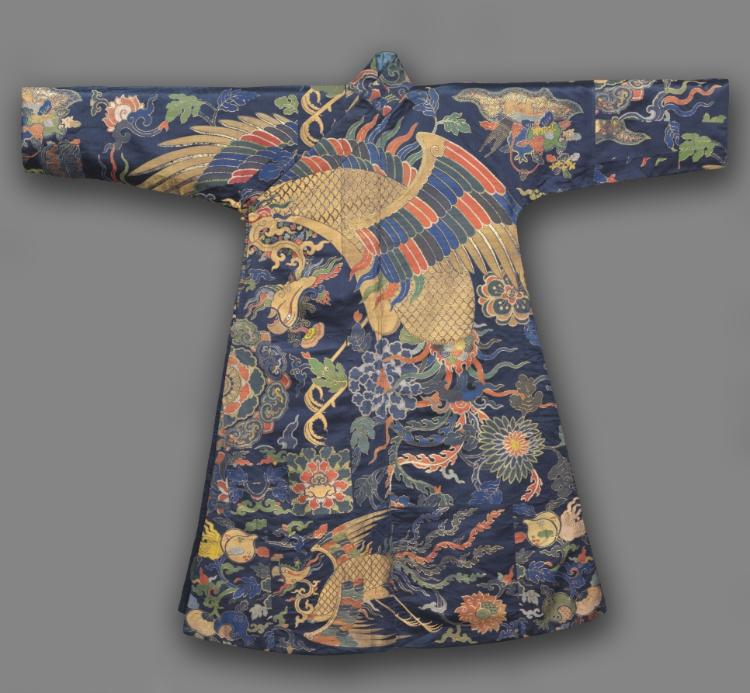
Tibetan Man’s Robe, Chuba
✓ Authenticity guarantee · ✓ Specialist condition report · ✓ Insured worldwide shipping · ✓ Private-room viewing
This magnificent robe for a Tibetan lama or an aristocrat was originally a Chinese imperial wall hanging. Tibetan tailors cut it into 60 separate units, reassembling the fabric for a completely new and bold design. The wearer of such a garment must have impressed bystanders by his striking appearance. What you see here is the robe’s back side.<br><br>Textiles played an important role in Chinese diplomacy with foreign governments. Diplomatic gifts of silk served to pacify border populations and to maintain balanced power relationships. Over centuries the Chinese court endeavored to keep a stable relationship with powerful Tibetan Buddhists. During the Qing dynasty (1644–1911) the Chinese court began to send gifts of court garments and furnishings to Tibet where they were altered to create Tibetan-style robes.
| Artist / Maker | Anonymous, Kangxi period (1662-1772) |
|---|---|
| Date | late 1600s |
| Culture / Origin | China, Qing dynasty (1644-1911), Kangxi period (1662-1772) |
| Medium | Silk, gilt-metal thread of two kinds: satin weave with supplementary weft patterning |
| Dimensions | width across shoulders: 189.9 cm (74 3/4 in.); length back of neck to hem: 152.4 cm (60 in.) |
| Department | Textiles |
| Type | Garment |
About the Artist
Provenance & Source
Image & data: Cleveland Museum of Art, CC0 / Public Domain.
Condition
A detailed condition report and high-resolution photography are available from our specialists in advance of the sale.
Shipping & Collection
Fine-art shipping with climate control and full insurance to over 120 countries; collection by appointment.
Buying at Matchless Pieces
Register, verify your identity, and bid online or in a private room. Buyer’s premium and taxes are shown before you confirm.