Click image to view full screen

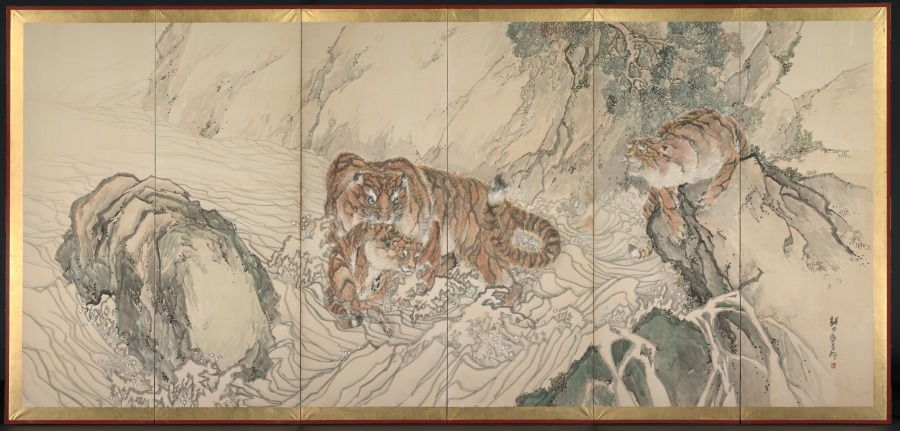
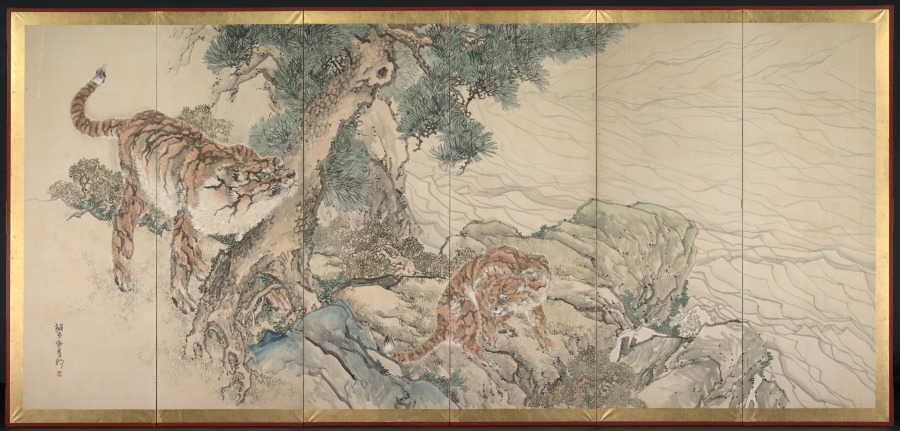
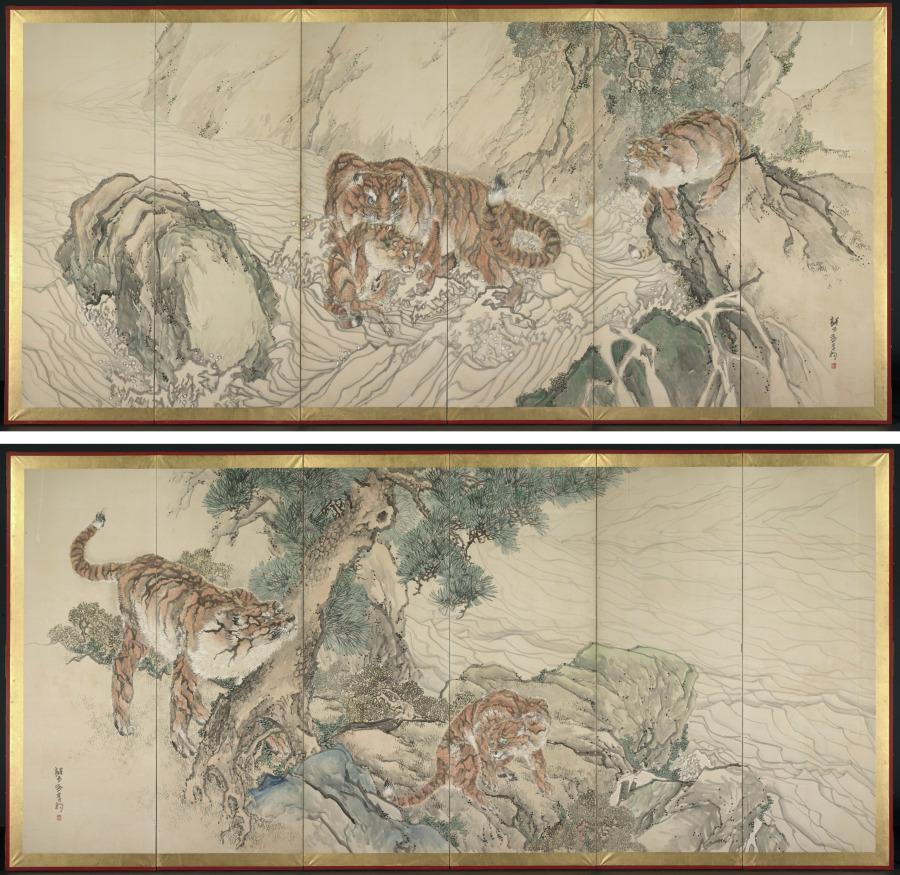
Tiger Family
✓ Authenticity guarantee · ✓ Specialist condition report · ✓ Insured worldwide shipping · ✓ Private-room viewing
By the time this self-taught painter reached his thirties, his paintings were keenly sought after by Kyoto’s sophisticated patrons, including members of the imperial family. Judging from the surviving works, his supporters delighted in the colorful, auspicious imagery of Chinese historical figures, blossoming plum trees, cranes, peacocks, roosters, and especially tigers. Kishi Ganku was originally from the coastal town of Kanazawa, but relocated to Kyoto to work for the Arisugawa family. His work incorporates stylistic elements from the Kano school, the Maruyama school, and works by the Chinese artist Shen Nanping (1682–1760).
| Artist / Maker | Kishi Ganku |
|---|---|
| Date | early 1800s |
| Culture / Origin | Japan, Edo period (1615–1868) |
| Medium | Pair of six-panel folding screens; ink and color on paper |
| Dimensions | Overall: 179.4 x 384.8 cm (70 5/8 x 151 1/2 in.) |
| Department | Japanese Art |
| Type | Painting |
About the Artist
BiographyKishi Ganku (1749–1839) — Japanese artist (1749-1839).Kishi Ganku worked as painter and is associated with Japan. Their documented life spans the years 1749 to 1839, born in Kanazawa, died in Kyoto.DisciplinespainterBorn1749, KanazawaDied1839, KyotoNationalityJapanSources: Wikidata · Wikipedia Full biography →
Provenance & Source
Image & data: Cleveland Museum of Art, CC0 / Public Domain.
Condition
A detailed condition report and high-resolution photography are available from our specialists in advance of the sale.
Shipping & Collection
Fine-art shipping with climate control and full insurance to over 120 countries; collection by appointment.
Buying at Matchless Pieces
Register, verify your identity, and bid online or in a private room. Buyer’s premium and taxes are shown before you confirm.